Owning a dog isn’t just about providing food, a comfortable bed and plenty of cuddles — although we’re sure most dogs would happily accept all three!
Regular walks are one of the most important parts of keeping a dog happy, healthy and mentally stimulated.
At Pet Getaway, we spend a lot of time around dogs and see first-hand just how much a good walk can improve their day. Whether it’s exploring new smells, stretching their legs or simply enjoying some one-to-one attention, a walk provides far more than just physical exercise.
For busy owners, however, fitting those walks around work, family commitments and everyday life isn’t always easy. That’s where a reliable dog walking service in Wigan can make a real difference.
🐾 Walking Is About More Than Exercise
When we think about taking a dog for a walk, exercise is usually the first benefit that comes to mind.
And it certainly matters.
Regular activity helps dogs maintain a healthy weight, supports their joints and muscles and gives them an opportunity to burn off excess energy.
But there’s another side to walking that’s just as important: mental stimulation.
Dogs experience much of the world through their noses. A route that might seem completely ordinary to us can be packed with interesting information for a dog.
New smells, other dogs, wildlife and changes in the environment all give their brains something to process.
Allowing a dog time to safely sniff and explore can therefore be an important part of a fulfilling walk.
🧠 A Happier and More Relaxed Dog
Have you ever noticed how content many dogs seem after a good walk?
There’s a reason for that.
Dogs that aren’t receiving enough physical exercise or mental stimulation can sometimes become restless or bored. That extra energy may show itself through behaviours such as excessive barking, chewing, pacing or struggling to settle.
A suitable walking routine gives them an outlet for that energy.
It doesn’t mean every dog needs an enormous hike every day, either. Different breeds, ages and individual dogs have very different requirements.
A young energetic dog may enjoy longer adventures, while an older dog might be perfectly happy with a shorter, gentler stroll and plenty of opportunities to sniff.
The important thing is finding a routine that suits the individual dog.
🌳 Exploring Wigan With Your Dog
We’re fortunate to have plenty of places around Wigan and the surrounding areas where dogs can enjoy getting outside.
From local parks and footpaths to quieter walking routes around Hindley, Standish, Westhoughton, Ince-in-Makerfield, Aspull, Leigh and Ashton-in-Makerfield, there’s no shortage of opportunities for a change of scenery.
And variety can be great for dogs.
Walking exactly the same route every day can become predictable, whereas occasionally exploring somewhere different introduces new smells and experiences.
Of course, the best route also depends on the individual dog. Some love busy environments and meeting other dogs, while others are much happier somewhere peaceful with a little more space.
At Pet Getaway, we believe that understanding those individual preferences is an important part of good dog care.
🐕 Socialisation and Confidence
Walks can also provide opportunities for dogs to become comfortable with the world around them.
They might encounter other dogs, people, traffic, bicycles and unfamiliar sounds.
Positive experiences can help dogs develop confidence, although socialisation doesn’t mean forcing every dog to interact with everyone they meet.
Some dogs love making friends.
Others would much rather keep their distance!
A responsible dog walker should recognise this and never assume that every dog needs the same type of interaction.
⏰ When Life Gets Busy
Most dog owners want to give their dogs as much time and attention as possible, but real life sometimes gets in the way.
Work commitments, appointments, family responsibilities or an unexpectedly busy day can make fitting in a proper walk difficult.
Using a professional dog walker in Wigan can help maintain your dog’s routine on those days.
Rather than spending a long period waiting at home, they get an opportunity to go outside, explore and enjoy some attention before returning home feeling more settled.
It can also provide owners with some reassurance that their dog has had exercise and company while they’re unavailable.
🔎 What Should You Look for in a Dog Walker?
Trust is incredibly important when choosing someone to care for your dog.
After all, you’re not simply handing somebody a lead. You’re trusting them with a member of your family — and potentially access to your home.
Before choosing a dog walker, it’s worth asking about their experience, insurance, qualifications and how they handle emergencies.
You should also find out how many dogs they walk together and whether they’ll take the time to understand your dog’s personality, routine and individual needs.
A meet and greet before the first walk is particularly valuable. It gives both the owner and the dog an opportunity to become comfortable with the person who’ll be caring for them.
At Pet Getaway, we believe good pet care should always begin with getting to know the dog.
🏡 Dog Walking, Day Care or Boarding?
Sometimes a walk is all that’s needed.
Other dogs may benefit from spending more of the day with someone, particularly when their owners are away from home for longer periods.
That’s where doggy day care can be useful.
Day care can provide company, enrichment, appropriate exercise and somewhere comfortable to relax throughout the day.
And when owners are travelling or going away overnight, our home dog boarding in Wigan provides another option — giving dogs a home-from-home environment rather than a traditional kennel setting.
The right choice depends entirely on your dog and your circumstances.
❤️ Every Dog Is Different
Perhaps the most important thing we’ve learned from caring for dogs is that there really isn’t a one-size-fits-all approach.
Some dogs could walk for hours.
Some would rather spend half of their walk investigating one particularly fascinating patch of grass.
Some love canine company, while others prefer having their human all to themselves.
A good dog care service should adapt to the dog rather than expecting the dog to adapt to the service.
That’s something we care deeply about at Pet Getaway.
Looking for Dog Walking in Wigan?
If you’re looking for a friendly and reliable dog walking service in Wigan, Hindley or the surrounding areas, we’d love to hear from you.
Whether you need occasional help when life gets busy or you’re looking for regular walks, we can discuss your dog’s routine, personality and individual requirements before deciding what’s right for them.
Enhanced DBS checked • Experienced dog care • Local Wigan service
🐾 Get in Touch With Pet Getaway

Puppy Training Advice Just Got a Fun Upgrade: Our Comic Book Is Making Headlines! 📰
Hello to all dog lovers across the UK!
If you’ve been searching for puppy training advice that’s actually easy to follow, I’ve got some exciting news to share…
✨ Basic Obedience for Humans Level 1 — my unique comic-style training guide — has just been featured in a Spanish publication, highlighting it as an “innovative and moving project” that is changing how people approach dog training.
A New Way to Learn Puppy Training Advice
Let’s face it—most puppy training advice comes in the form of long, complicated guides that can feel overwhelming, especially for new dog owners.
That’s exactly why this comic book is different.
Instead of:
- Dense text
- Confusing terminology
- Outdated training methods
You get:
- Visual storytelling
- Simple, clear steps
- A fun and engaging learning experience
All designed to help you understand your dog faster.
Learn Through Your Dog’s Eyes 🐶
What makes this approach truly powerful is the perspective.
The entire comic is told through the eyes of a dog—helping you finally understand:
- Why your puppy behaves the way they do
- How they interpret your actions
- What they actually need from you
This is what makes it such a refreshing take on puppy training advice—it simplifies communication between you and your dog.
Meet Astro: The Inspiration Behind It All
Astro, a Colombian Shepherd, is the heart of this story.
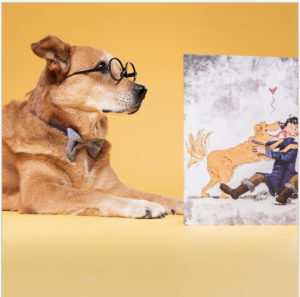
Once labelled as a “reactive” dog, Astro went on to:
- Overcome behavioural challenges
- Train successfully
- Serve in a Search and Rescue team for six years
His journey inspired the creation of this guide—to help others build better relationships with their dogs through understanding, not frustration.
Why This Comic Book Works
Reviewers are calling it:
- “Instructive, useful, and practical”
- “Fun and charming”
- “Perfect for all ages”
And that’s because it turns complicated training concepts into something simple, memorable, and enjoyable.
If you’ve ever struggled with:
- House training
- Basic obedience
- Understanding your puppy’s behaviour
This gives you a much clearer path forward.
Ready to Make Training Easier?
If you want puppy training advice that’s actually enjoyable to follow, this is a great place to start:
👉 Puppy Training Advice Comic Guide
Whether you’re a first-time owner or just want a better way to connect with your dog, this approach makes learning feel effortless.
My Mission
This project has always been about more than training.
It’s about:
- Reducing misunderstandings
- Building trust
- Creating happier relationships between dogs and their humans
Because when communication improves… everything else follows.
Is Doggy Daycare Worth It? (Wigan Dog Owners Guide)
If you’re considering doggy daycare in Wigan, you’re probably asking one key question:
👉 Is doggy daycare actually worth it for my dog?
The short answer is yes — for most dogs, it can be incredibly beneficial. But it depends on your dog’s personality, routine, and needs.
In this guide, we’ll break down the real benefits, when it’s worth it, and when it might not be the right fit.
🐶 What Is Doggy Daycare?
Doggy daycare is a service where dogs are cared for during the day in a safe, supervised environment while their owners are at work or busy.
Dogs typically enjoy:
- Social interaction with other dogs
- Supervised playtime
- Rest and relaxation areas
- Mental stimulation and enrichment
If you’re looking for doggy daycare in Wigan, services can vary from basic supervision to structured, high-quality care environments.
✅ Benefits of Doggy Daycare
1. Reduces Boredom & Destructive Behaviour
Dogs left alone for long periods can become bored, leading to chewing, barking, or anxiety. Daycare keeps them mentally engaged.
2. Improves Socialisation
Regular interaction with other dogs helps improve behaviour, confidence, and reduces fear or aggression.
3. Helps with Separation Anxiety
Dogs that struggle being left alone benefit from companionship and routine.
4. Provides Regular Exercise
Instead of sleeping all day, your dog stays active and stimulated.
5. Peace of Mind for Owners
You know your dog is safe, supervised, and happy while you’re away.
⚖️ When Doggy Daycare Might NOT Be Worth It
Doggy daycare isn’t perfect for every dog.
It may not suit:
- Very anxious or nervous dogs
- Dogs that don’t enjoy other dogs
- Dogs with medical or behavioural issues
👉 A good daycare will assess your dog before accepting them.
💸 Is Doggy Daycare Worth the Cost?
In Wigan, doggy daycare typically costs:
- £20 → basic care
- £20–£30 → structured, premium care
While it’s an added expense, many owners find the benefits — especially behaviour improvement and peace of mind — make it worthwhile.
🐾 Doggy Daycare vs Leaving Your Dog at Home
| Option | Pros | Cons |
|---|---|---|
| Stay at Home | Free, familiar | Boredom, loneliness |
| Doggy Daycare | Social, active, supervised | Cost |
👉 For working owners, daycare is often the better long-term option.
📍 Doggy Daycare in Wigan (Coming Soon)
If you’re considering daycare locally, we’re currently preparing to launch a new service at Pet Getaway Club.
👉 Our goal is to offer:
- Safe, supervised care
- Small, well-managed groups
- Affordable pricing
- A calm, structured environment
👉 Explore Doggy Daycare in Wigan
If you’re looking for affordable, safe doggy daycare in Wigan, you can learn more here:
👉 Doggy Daycare Wigan – Prices & Info
❓ Frequently Asked Questions
Is doggy daycare good for all dogs?
Most dogs benefit, but temperament and social ability matter.
How many days a week should a dog go to daycare?
Many dogs attend 1–3 days per week depending on owner needs.
Will my dog be tired after daycare?
Yes — in a good way! Dogs usually come home relaxed after a full day of activity.
🐕 Final Thoughts
So, is doggy daycare worth it?
👉 For most dogs — absolutely.
It provides stimulation, socialisation, and a better daily routine, especially for busy owners.
If you’re based in Wigan and considering daycare, it’s worth exploring your options early — especially as spaces can fill quickly once services launch.
🐾 Strategies to Reduce Separation Anxiety in Dogs
Dog separation anxiety happens when dogs become stressed when left alone. This can lead to barking, whining, destructive behaviour, and pacing. The good news is there are simple steps you can take to help your dog feel calmer and more secure.
Separation anxiety is one of the most common behavioural challenges dog owners face. It can be distressing for both dogs and their owners—but with the right approach, it’s absolutely manageable.
The key is understanding that separation anxiety isn’t “bad behaviour”—it’s panic and distress when left alone.
To deal with dog separation anxiety, start by gradually increasing the time your dog is left alone, keeping departures calm and low-key. Establish a consistent daily routine, provide enough physical and mental exercise, and create a safe, comfortable space where your dog can relax. Avoid punishment, as this can increase anxiety.
How to reduce separation anxiety (step-by-step)
- Start with short absences
- Keep departures calm
- Build a routine
- Increase exercise
- Create a safe space
Key Strategies:
- Gradual desensitisation
- Consistent routine
- Exercise and stimulation
- Safe resting space
🧠 What Is Separation Anxiety in dogs?
Dogs with separation anxiety struggle when they are:
- Left alone
- Separated from their owner
- Unable to access their “safe person”
Common signs:
- Barking, whining, or howling
- Destructive behaviour (doors, furniture)
- Pacing or restlessness
- Toileting indoors
- Trying to escape
👉 These behaviours come from anxiety, not disobedience
In our experience caring for dogs in a home boarding environment, separation anxiety is one of the most common challenges we see, especially in dogs that are not used to being left alone.
a few new tactics we have been testing and find works well are:
🧠 Unique & Fresh Ideas on Dog Separation Anxiety
1. 🧩 “Micro-Departures” Training (Beyond Basic Desensitisation)


Instead of just “leave for short periods,” break departures into tiny behavioural triggers:
- Pick up keys → sit down again
- Put shoes on → don’t leave
- Open door → close it
👉 You’re training the triggers, not just the absence.
2. 🎧 Owner-Scent + Sound Pairing Technique


Most people leave an item with scent — but combine it with:
- A recording of your voice
- Played ONLY when you’re gone
👉 Creates a predictable emotional anchor
Upgrade idea:
Rotate 2–3 recordings so it doesn’t lose meaning.
3. 🚪 “False Exit” Routine (Reverse Psychology)

Leave → come back → ignore dog → repeat randomly.
👉 Teaches:
“Owner leaving ≠ big emotional event”
Unique twist:
Track your dog’s reaction score (1–10) to show progress
4. 🧠 Mental Exhaustion Before Separation (Not Just Physical)

Most people over-exercise physically.
Better:
- Snuffle mats
- Scent games
- 10-minute training sessions
👉 Mental fatigue = calmer nervous system.
5. 🕒 Predictive Routine Anchoring

Dogs relax when they can predict life.
Create a fixed pre-departure sequence:
- Walk
- Feed
- Calm time
- Leave
👉 Same order every time
Unique framing:
“Predictability reduces panic — not your presence”
6. 🧊 The “Calm Departure Energy” Rule

Most people accidentally create anxiety by:
- Saying goodbye
- Touching
- Talking emotionally
👉 Your energy teaches the dog:
“This is a big deal.”
Simple rule:
Leave like you’re grabbing milk.
7. 🐕 “Independence Training” While You’re STILL Home


This is massively overlooked.
Train:
- Dog stays in another room
- No constant following
- Reward calm independence
👉 Separation anxiety often starts when dogs are never actually independent
8. 🔄 The “Over-Attachment Audit”

Before fixing anxiety, identify behaviours like:
- Following everywhere
- Demanding attention
- No solo rest
👉 These are early warning signs
9. 📦 Safe Space Reconditioning (Crate or Zone)

Instead of “put dog in crate when leaving”:
- Build positive association FIRST
- Feed meals there
- Relaxation only
👉 It becomes a calm anchor, not confinement
10. 📊 “Alone Time Tracking System” (Content Gold)

Have owners track:
- Time alone
- Behaviour
- Triggers
- Progress
👉 Turns emotion into measurable improvement
SEO angle:
“Track your dog’s separation anxiety like a professional trainer”
🎯 Why dogs develop separation anxiety
Separation anxiety can develop due to:
- Sudden changes in routine
- Moving home
- Being rehomed or rescued
- Lack of independence training
- Over-dependence on owners
🛠️ Effective Strategies to Reduce Separation Anxiety
🐌 1. Build Independence Gradually
Start by teaching your dog to be comfortable alone in small steps:
- Leave the room briefly
- Increase time slowly
- Return before your dog becomes stressed
👉 Progress slowly—rushing makes it worse
🚪 2. Make Departures Low-Key
Avoid big goodbyes or emotional exits
- Stay calm when leaving
- Keep arrivals relaxed too
👉 This reduces emotional spikes
🧩 3. Create Positive Associations
Help your dog link alone time with good things:
- Food puzzles or lick mats
- Long-lasting chews
- Special toys only used when alone
👉 “Owner leaves = something good happens”
🏡 4. Provide a Safe, Comfortable Space
- Quiet area or crate (if trained positively)
- Familiar bedding
- Background noise (TV or calming music)
👉 A secure environment reduces stress
⏱️ 5. Practice Short Absences Daily
Consistency is key:
- Step outside for a few seconds
- Gradually build duration
- Repeat regularly
🧠 6. Use Desensitisation to Triggers
Dogs often react to pre-leaving cues like:
- Picking up keys
- Putting on shoes
- Opening doors
Practice these without leaving
👉 Helps break the anxiety cycle
🐕 7. Ensure Physical & Mental Fulfilment
Before leaving your dog:
- Walk them
- Provide enrichment
- Engage their brain
👉 A fulfilled dog is more likely to relax
👀 8. Avoid “Testing” Your Dog Too Soon
Leaving them too long too early can:
- Reinforce anxiety
- Undo progress
👉 Build duration gradually
🚫 Common Mistakes
- Punishing destruction or barking
- Leaving dogs for long periods too soon
- Creating emotional goodbyes
- Ignoring early signs of stress
👉 Punishment increases anxiety—not fixes it
🐾 When to Seek Help
Consider professional support if:
- Anxiety is severe
- Your dog attempts to escape
- Behaviour is not improving
A qualified trainer or vet can provide tailored guidance
If you’re based in Wigan and need support, our home dog boarding service provides a calm, structured environment ideal for anxious dogs.
💡 Dog Lovers Wigan Tip
Alone time should be taught—not expected.
Confidence grows when dogs learn that you always come back.
FAQs
How long does separation anxiety last?
It varies, but with consistent training many dogs improve within a few weeks.
Should I ignore my dog when leaving?
Yes, keeping departures calm helps reduce anxiety.
Can dogs grow out of separation anxiety?
Some improve over time, but most need guidance and routine.
🐕 Final Thoughts
Separation anxiety takes time, patience, and consistency—but progress is absolutely possible.
Focus on:
- Building confidence
- Creating positive associations
- Moving at your dog’s pace
👉 Small steps lead to big changes
🐾 The Necessity of Distraction Training in Dogs
Training your dog at home is one thing—but the real world is full of distractions. Other dogs, people, smells, traffic, and noise all compete for your dog’s attention.
Distraction training is what turns a “well-trained dog at home” into a reliable, well-behaved dog anywhere.
🧠 What Is Distraction Training?
Distraction training is the process of teaching your dog to stay focused and responsive despite environmental stimuli.
Instead of only training in quiet spaces, you gradually introduce:
- Movement (people, dogs, bikes)
- Sounds (traffic, children, doors)
- Smells (food, wildlife, new environments)
👉 The goal: your dog learns to choose you over distractions
🎯 Why It’s Essential
✔️ Real-Life Reliability
A dog that only listens at home isn’t truly trained.
Distraction training ensures commands work:
- On walks
- In parks
- Around other dogs
- In busy environments
✔️ Improves Safety
Reliable behaviour can prevent dangerous situations:
- Ignoring recall near roads
- Chasing bikes or wildlife
- Running toward other dogs
👉 Focus = safety
✔️ Reduces Reactivity
Many reactive behaviours are triggered by overstimulation.
Distraction training helps dogs:
- Stay under threshold
- Make better choices
- Remain calm around triggers
✔️ Builds Impulse Control
Dogs learn to:
- Pause before reacting
- Think instead of acting
- Regulate excitement
🐕 The Problem Without It
Without distraction training:
- Commands “fall apart” outside
- Dogs become overexcited or anxious
- Owners feel frustrated
- Behaviour appears inconsistent
👉 The issue isn’t disobedience—it’s lack of proofing
🧩 The Three D’s of Training
To build reliability, always consider:
📏 Distance
How far your dog is from the distraction
⏱ Duration
How long your dog maintains the behaviour
🌍 Distraction
How intense the environment is
👉 Increase one at a time, not all three together
🛠️ How to Train with Distractions
🐌 1. Start Small
Begin in a low-distraction environment
Then gradually increase difficulty
👀 2. Reward Focus
Mark and reward:
- Eye contact
- Check-ins
- Ignoring distractions
👉 Reinforce the behaviour you want
🍗 3. Use High-Value Rewards
In distracting environments, upgrade rewards:
- Chicken
- Cheese
- Favourite toys
🔁 4. Practice Consistently
Short, regular sessions are more effective than long ones
🧠 5. Set Your Dog Up to Succeed
Don’t jump straight into busy parks
Build up gradually
🚫 Common Mistakes
- Training too quickly in high-distraction areas
- Repeating commands without results
- Using low-value rewards
- Getting frustrated when the dog struggles
👉 If your dog is failing, the environment is too difficult
🐾 Real-Life Examples
- Practising recall in a quiet field → then near other dogs
- Loose lead walking on a quiet street → then a busy park
- Sit/stay at home → then outside a café
💡 Dog Lovers Wigan Tip
If your dog can’t listen, they’re not being stubborn—they’re overwhelmed.
Lower the distraction, rebuild focus, and try again.
🐕 Final Thoughts
Distraction training is not an “extra”—it’s essential.
It transforms:
- Basic training → real-world reliability
- Excited reactions → calm decisions
- Frustration → clear communication
A truly trained dog isn’t the one who listens at home…
👉 It’s the one who listens when it matters most
🐾 The Role of Positive Reinforcement in Advanced Dog Training
Positive reinforcement is one of the most effective, ethical, and science-backed approaches in modern dog training. Whether you’re working on basic obedience or advanced behavioural challenges, reward-based methods create reliable results while strengthening the relationship between dog and owner.
🧠 What Is Positive Reinforcement?
Positive reinforcement means adding something the dog values (like food, praise, or play) immediately after a desired behaviour—making that behaviour more likely to happen again.
Examples:
- Dog sits → receives a treat
- Dog checks in on a walk → gets praise
- Dog ignores a trigger → rewarded
Over time, the dog learns:
👉 “When I do this, good things happen.”
🎯 Why It’s Essential in Advanced Training
Advanced training isn’t just about teaching commands—it’s about consistency, emotional control, and decision-making under pressure.
Positive reinforcement helps by:
✔️ Increasing Reliability
Dogs are more likely to repeat behaviours that consistently lead to rewards—even in distracting environments.
✔️ Improving Focus & Engagement
Reward-based training keeps dogs mentally “in the game,” especially during longer or more complex sessions.
✔️ Encouraging Willing Participation
Dogs trained with rewards are active learners, not just compliant responders.
🐕 Key Benefits of Positive Reinforcement
💛 Builds Trust and Strengthens the Bond
Reward-based training creates a relationship built on cooperation rather than fear.
Dogs begin to see their owner as a source of safety and good experiences.
🧘 Reduces Anxiety and Fear
Unlike punishment-based methods, positive reinforcement:
- Lowers stress
- Builds confidence
- Helps sensitive or reactive dogs feel more secure
This is especially important for:
- Rescue dogs
- Nervous dogs
- Dogs with fear-based reactivity
🎓 Encourages Voluntary Behaviour
Dogs choose to engage because they want to, not because they feel forced.
This leads to:
- Faster learning
- Better long-term retention
- More enthusiasm during training
🧩 Enhances Problem-Solving Skills
Dogs trained with rewards become better at:
- Offering behaviours
- Thinking independently
- Adapting to new situations
🔄 Positive Reinforcement in Behaviour Modification
This is where it becomes powerful beyond basic training.
🐾 Reactivity
Reward calm behaviour around triggers to change emotional responses.
🐾 Fear & Phobias
Pair scary experiences with positive outcomes (counter-conditioning).
🐾 Separation Anxiety
Reinforce calm, relaxed states when alone.
👉 Instead of suppressing behaviour, you’re changing how the dog feels.
⚖️ Positive Reinforcement vs Punishment-Based Training
| Positive Reinforcement | Punishment-Based |
|---|---|
| Builds trust | Can damage trust |
| Encourages learning | Suppresses behaviour |
| Reduces fear | Can increase anxiety |
| Long-term success | Often short-term fixes |
👉 Suppressing behaviour doesn’t remove the underlying emotion—it often makes it worse.
🧠 The Science Behind It
Positive reinforcement is rooted in operant conditioning, a well-established learning theory.
In simple terms:
- Behaviours followed by rewards → increase
- Behaviours ignored → fade over time
Dopamine (the “feel good” chemical) plays a key role—meaning dogs literally enjoy learning this way.
🛠️ How to Use It Effectively
🎯 Timing is Everything
Reward immediately (within 1–2 seconds) so the dog links behaviour to reward.
🍗 Use High-Value Rewards
Not all rewards are equal:
- Low distraction → kibble may work
- High distraction → use chicken, cheese, etc.
🔁 Be Consistent
Inconsistent rewards = confusion
Consistency = clarity and faster learning
🐌 Start Simple, Then Progress
Build behaviours gradually before increasing difficulty or distractions.
🧠 Reward the Right Moment
Mark the exact behaviour (using a word like “yes” or a clicker)
🚫 Common Mistakes to Avoid
- Rewarding too late
- Asking for too much too quickly
- Using low-value rewards in high-distraction environments
- Accidentally reinforcing unwanted behaviour
- Expecting instant results
👉 Progress comes from repetition and clarity, not speed
🐾 Real-Life Applications
Positive reinforcement can be used for:
- Loose lead walking
- Recall training
- Socialisation
- Reducing reactivity
- Building confidence
- Advanced obedience and trick training
💡 Dog Lovers Wigan Tip
Positive reinforcement isn’t just training—it’s communication.
When your dog understands how to succeed, confidence grows and behaviour improves naturally.
🐕 Final Thoughts
Positive reinforcement is more than a technique—it’s a mindset.
It focuses on guiding behaviour, building trust, and creating a dog that wants to work with you.
When used correctly, it leads to:
- Happier dogs
- Stronger bonds
- More reliable behaviour
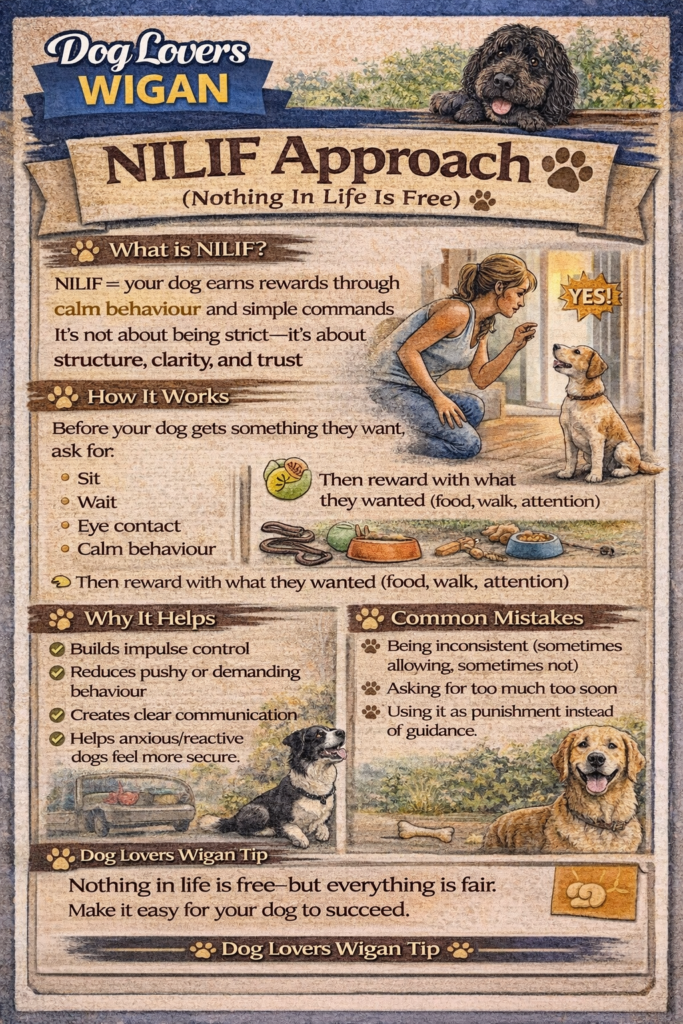
🐾 NILIF Approach (Nothing In Life Is Free)
🧠 What is NILIF?
NILIF = your dog earns rewards through calm behaviour and simple commands
It’s not about being strict—it’s about structure, clarity, and trust
🐕 How It Works
Before your dog gets something they want, ask for:
- Sit
- Wait
- Eye contact
- Calm behaviour
👉 Then reward with what they wanted (food, walk, attention)
🍽 Everyday Examples
- Food time → Ask for a sit before placing the bowl
- Walks → Calm sit before the lead goes on
- Doors → Wait calmly before going out
- Attention → No jumping—reward calm greetings
⚖️ Why It Helps
- Builds impulse control
- Reduces pushy or demanding behaviour
- Creates clear communication
- Helps anxious/reactive dogs feel more secure
🚫 Common Mistakes
- Being inconsistent (sometimes allowing, sometimes not)
- Asking for too much too soon
- Using it as punishment instead of guidance
👉 Keep it fair, simple, and positive
💛 Important Reminder
NILIF should never feel harsh or controlling
It works best with:
- Positive reinforcement
- Patience
- Clear, calm communication
🐾 Dog Lovers Wigan Tip
Structure creates confidence—dogs thrive when they understand how to succeed.
Infographic you are free to share.
🐾 Techniques to Manage Reactivity in Dogs
🧠 1. Create Distance
- Move away from triggers before your dog reacts
- Cross the road, change direction, or pause at a distance
- Distance = calmer thinking
👉 Set your dog up to succeed
🍗 2. Use High-Value Rewards
- Reward calm behaviour immediately
- Use extra tasty treats (chicken, cheese, etc.)
- Reinforce focus on you, not the trigger
👉 Make YOU more rewarding than the environment
👀 3. Teach “Look at Me” / Focus
- Train your dog to check in with you
- Use a cue word or name
- Reward eye contact and calm attention
👉 Build engagement and trust
🐌 4. Gradual Exposure (Desensitisation)
- Start far from the trigger
- Slowly decrease distance over time
- Keep sessions short and positive
👉 Go at your dog’s pace
🔁 5. Counter-Conditioning
- Pair triggers with something positive (treats/play)
- Dog sees trigger → good things happen
- Changes emotional response over time
👉 From fear ➝ positive association
🐕🦺 6. Loose Lead & Calm Walking
- Reduce tension on the lead
- Stop/start or change direction when pulling
- Calm walking = calmer mindset
👉 Less tension = less reaction
🎯 7. Manage the Environment
- Avoid known triggers when possible
- Walk at quieter times/locations
- Use barriers (cars, hedges) for space
👉 Management is not failure—it’s smart
🧩 8. Mental & Physical Enrichment
- Sniff walks, puzzle toys, training games
- A fulfilled dog is less reactive
- Burn energy in healthy ways
👉 Tired brain = calmer dog
❤️ Dog Lovers Wigan Tip
Progress isn’t about perfection—it’s about small, consistent wins.
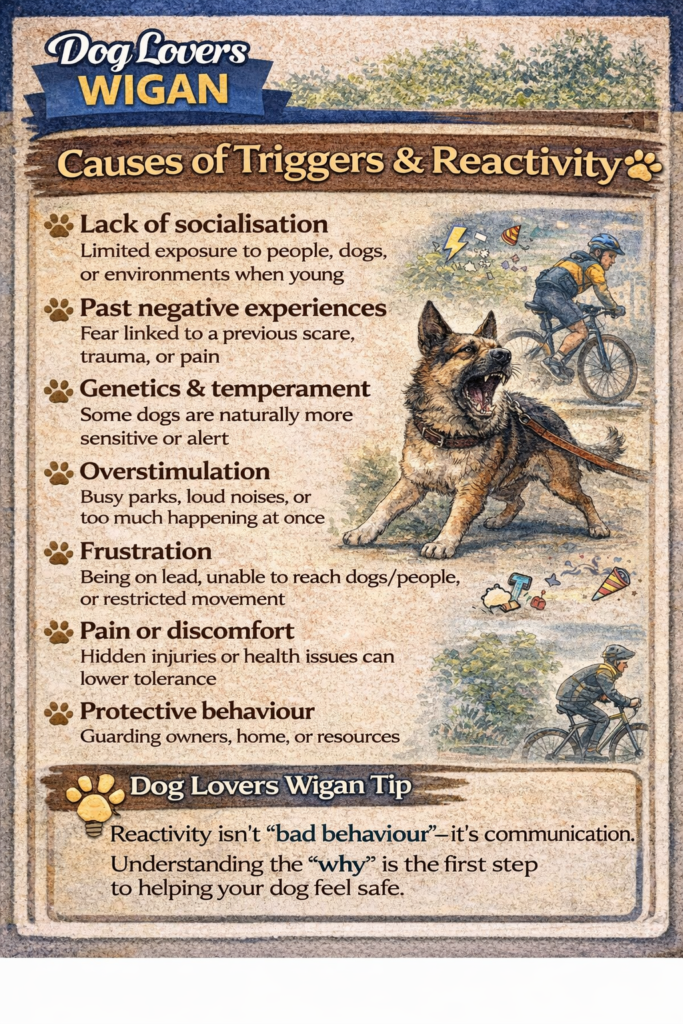
🐾 Causes of Triggers & Reactivity in Dogs
- Lack of socialisation
Limited exposure to people, dogs, or environments when young - Past negative experiences
Fear linked to a previous scare, trauma, or pain - Genetics & temperament
Some dogs are naturally more sensitive or alert - Overstimulation
Busy parks, loud noises, or too much happening at once - Frustration
Being on lead, unable to reach dogs/people, or restricted movement - Pain or discomfort
Hidden injuries or health issues can lower tolerance - Protective behaviour
Guarding owners, home, or resources
🔶 Fear-Based Reactivity
Dogs react because they feel unsafe or threatened
- Triggered by strangers, dogs, noises, or environments
- Often includes barking, lunging, or محاولة to escape
- Root cause = fear, not aggression
👉 Goal: Build confidence + create distance
🔶 Barrier Frustration
When a dog can’t reach something they want
- Common on leads, behind fences, or in cars
- Barking/lunging = frustration, not aggression
- Often seen in social or high-energy dogs
👉 Goal: Teach calm behaviour + impulse control
🔶 Overexcitement
Too much stimulation = loss of control
- Dogs struggle to regulate emotions
- Jumping, barking, pulling, spinning
- Often mistaken for “bad behaviour”
👉 Goal: Calmness training + structured outlets
🔶 Prey Drive & Chase Instinct
Natural instinct kicks in
- Triggered by bikes, runners, small animals
- Fast movement = instant reaction
- Not fear-based—instinct-driven
👉 Goal: Redirection + strong recall training
🔶 Pain or Discomfort
- Sudden reactivity can signal hidden pain
- Lower tolerance = quicker reactions
👉 Always worth a vet check
🔶 Lack of Socialisation
- Limited early exposure = uncertainty later
- New things feel overwhelming
👉 Slow, positive exposure is key
🔶 Learned Behaviour
- Behaviour that has “worked” before
- Barking makes things go away = reinforced
👉 Training changes the outcome
💡 Dog Lovers Wigan Tip
Reactivity isn’t “bad behaviour” — it’s communication.
Understanding the why is the first step to helping your dog feel safe.
A sharable info sheet is here: copy paste it.